Home
Home


Picture the scene: someone's been rummaging in the attic, and at the next family gathering, out comes a dusty, yellowed, half-forgotten photo album, a relic of that one holiday from years ago. And there you are, looking into the eyes of a person you used to be: it feels like a hazy, surreal copy of you, and yet unmistakably yourself. Almost instinctively, you start wondering: what would I say to that version of myself? Which doubts would I try to ease, which life lessons would I pass on right away, which warnings would come first?
For most of us, that's as far as it goes: a thought experiment. But thanks to VaynerMedia and production partner Tool (with nocomputer and Hummingbird on board as partners), it became a real conversation for six Pearson alumni. No dazzling CGI, no editing tricks, no actors playing a part. Six people found themselves face to face with an AI avatar of themselves, years or even decades younger, and got the chance to tell that younger self exactly what they themselves never got to hear.
Their individual stories aren't ours to tell here. What we can walk through is how far generative AI pushed human craft to make this campaign land the way it did, and the part nocomputer got to play in that.
It makes sense that this idea came from Pearson. For decades, the company's entire message has been that education can redirect a life: a diploma, a course, a certificate, and everything changes. So it's fitting that this campaign rests on six alumni who each hit a wall at some point: stuck, invisible, worn down by bullying, grief, instability, or a divorce that upended everything. In every case, education turned out to be the way through.
The setup itself added a layer of misdirection. Nobody was told they'd be talking to their younger self. Each participant was told, instead, that they'd meet a student with a similar background. Then their own younger face appeared in front of them, and they got to say exactly what they'd once needed to hear.
Which raises the real question: how do you build a convincing AI avatar of someone who, in a very real sense, doesn't exist anymore?
This may well change one day, but for now it's simply a fact of life: barely any footage exists of who you were ten or twenty years ago, if any exists at all. Usually it's just a stray photo, a handful of half-remembered details, and not much else. Starting from that scrap of material, the team had to reconstruct a person from scratch and then get that reconstruction talking, in real time, as if they'd never left.
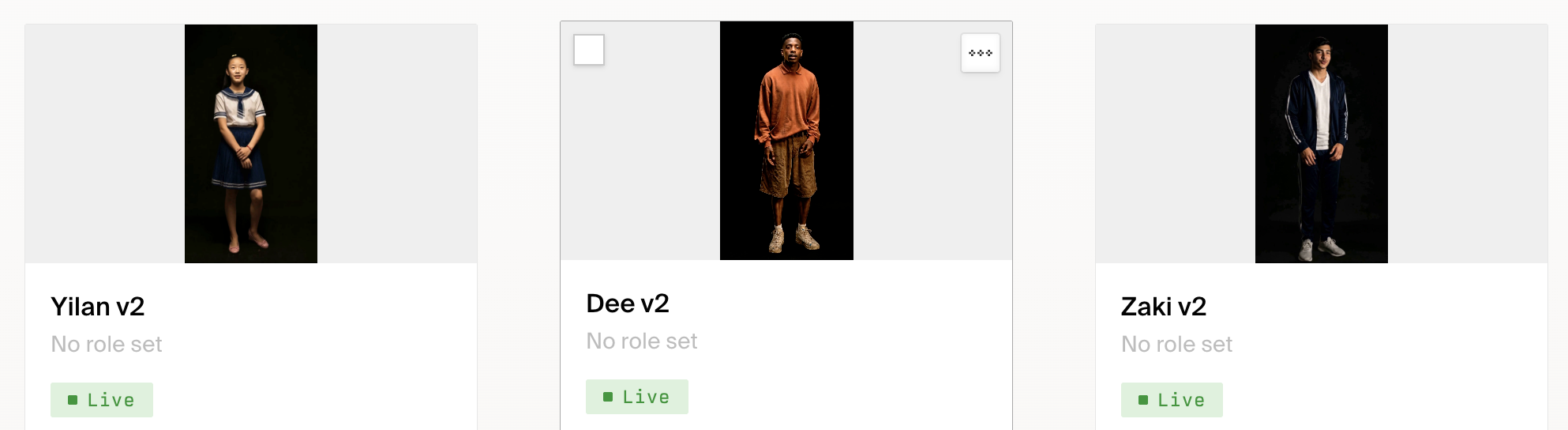
The first step was generating one sharp, photorealistic image of each participant at the chosen stage of their life. There was no video to work from, only a stack of old photos (some crisp, but most not), memories, and each person's own account of how they'd looked back then. Photoshop, Weavy (Nano Banana, Topaz, and Recraft among its tools), and dedicated facial-reconstruction workflows filled in the rest. Every detail, from clothing to posture to accessories, had to land perfectly, since the whole point was instant recognition. There was also a hard technical constraint hiding underneath it all: the image had to fit precisely within the optical limits of the projection glass used on set, which meant round after round of adjustment between the directors and the creative team.
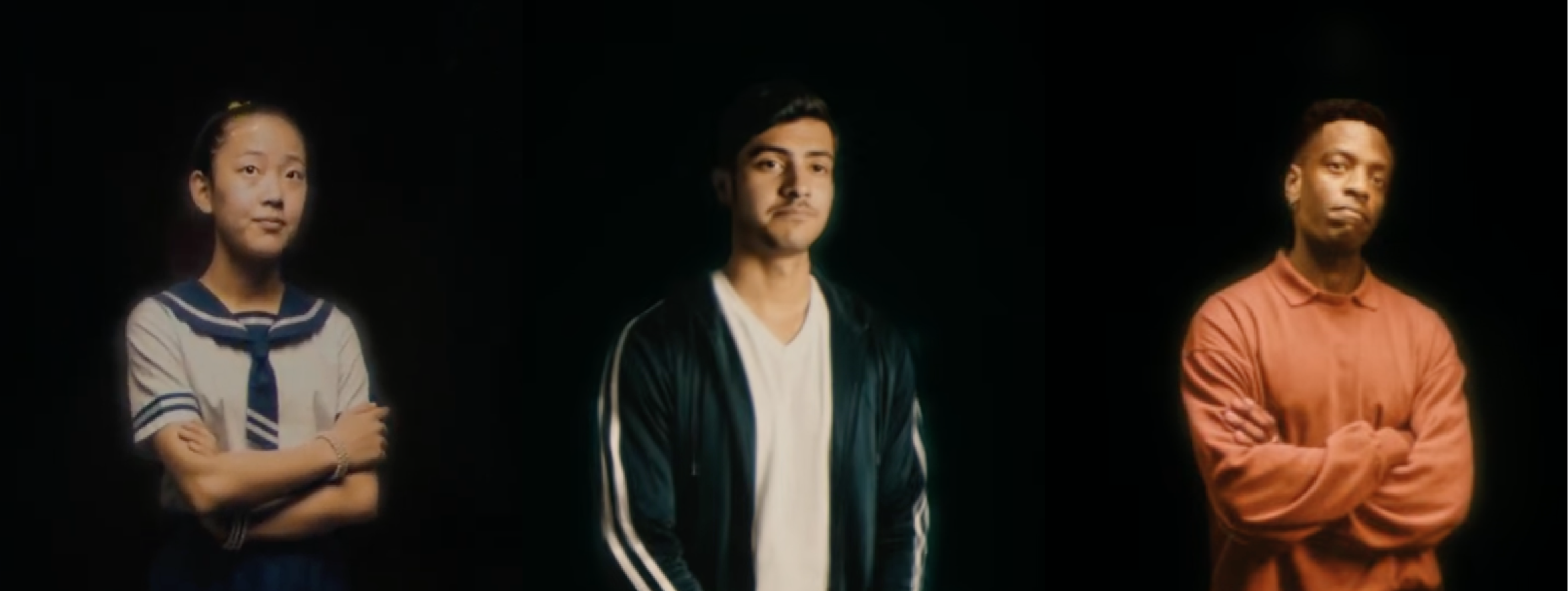
A photo, of course, makes for a pretty poor conversation partner. To get the image to talk, blink, and move like a real person, a driver video was needed: footage of a live actor supplying the subtle micro-movements, breathing, and emotional nuance. The longer and smoother that driver video, the more convincing and varied the avatar could later be. Tavus, the platform that would train the avatar, needed at least two minutes of flawless, fluid source material to produce a stable result.
That minimum was a real problem, because AI video generation typically tends to fall apart after about eight seconds: images that warp, flicker, or move unnaturally. To reach that two-minute mark anyway, the team built a custom ComfyUI workflow using WAN 2.2, running on RunPod (rented compute infrastructure for exactly this kind of heavy AI work). That workflow combined the actor's driver video with the still image of the younger version, processing both into the training video Tavus would use to build the avatar. What emerged was essentially a lifelike puppet show: the face of the younger version, driven by the movement of a real actor working just out of frame.
Nothing animated about it, then. A genuine performance. Any unnatural glitch would have completely undermined the credibility of the AI avatar.
With the driver videos ready, the footage went to Tavus, a platform built for customer-service bots, not exactly for emotionally loaded reunions with your younger self. The team pushed it well past its intended use: extreme close-ups, full-body shots, natural eye contact mixed with the occasional glance away, camera angles built for over-the-shoulder framing. Since one training run could eat a full day and mistakes couldn't be undone, the team ran several pipelines side by side just to find the system's limits faster.
But a moving face and body alone don't make an avatar believable. It also has to sound right. So during earlier interviews, participants recorded not just their stories but also voice samples, using professional Zoom recorders. The direction team specifically coached for emotional cadence, hesitation, and warmth, so the voice wouldn't come across as flat or read from a script.
One thing surprised the team: almost nobody remembers what their own voice sounded like years ago, but everyone recognizes it instantly today. That single insight changed the approach entirely, they dropped the idea of "de-aging" the voice and leaned instead on today's voice, cloned using different voice cloning tools depending on the speaker, since not every tool handled accents equally well. Recognition, it turned out, mattered more than accuracy.

A convincing face and voice still fall flat if the conversation itself feels like talking to a chatbot. So the directors mined the interviews for each person's emotional core: their fears, their defining memories, the things they'd never fully worked through. That material became the backbone of a conversational framework built on GPT-4.1 mini, chosen for how it balanced speed against response quality. Free improvisation was intentionally off the table; the goal was consistency, so each exchange felt human rather than random.
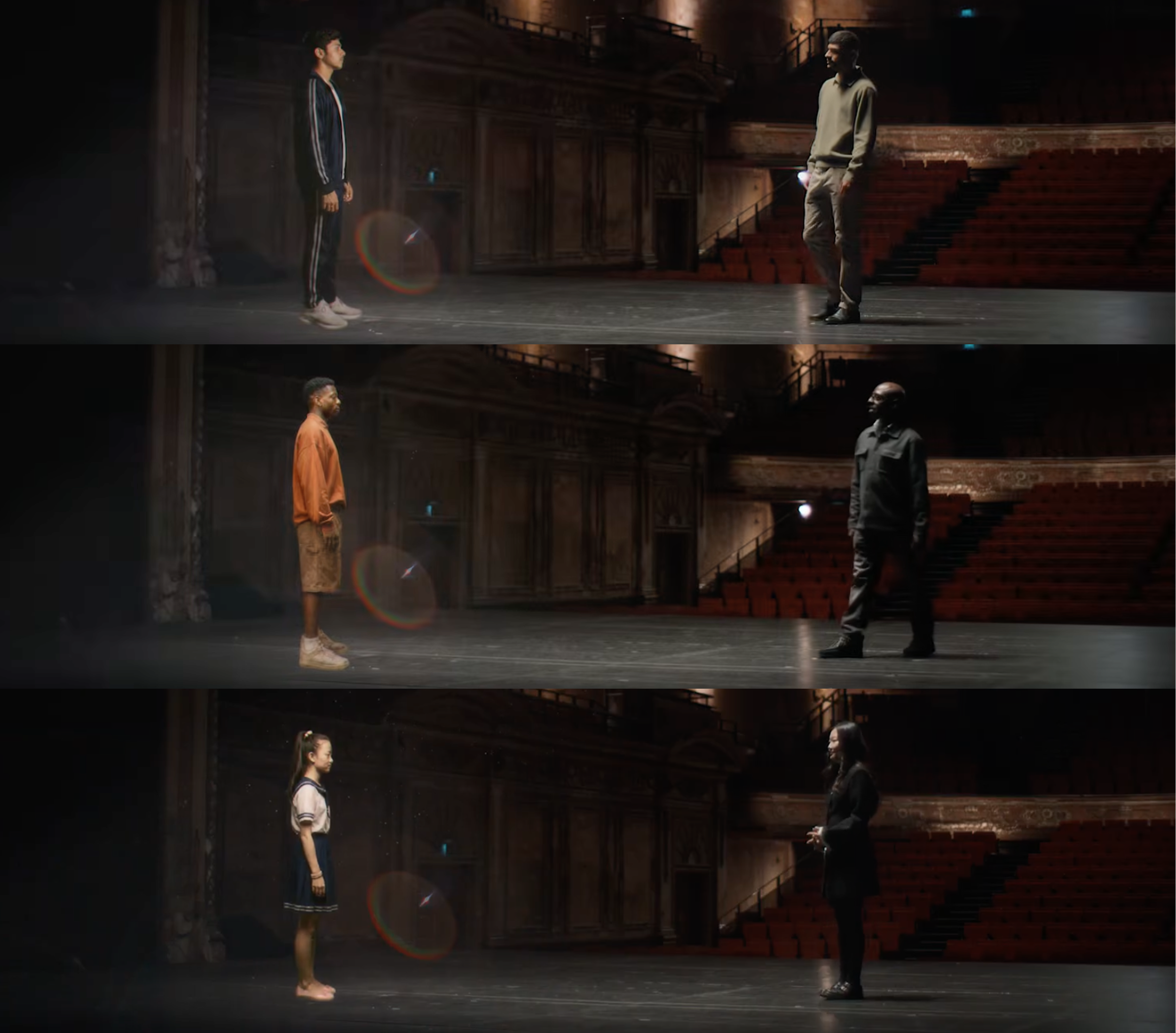
On the day of filming, everything had to come together at once. Behind the scenes ran a whole web of technology: real-time projection mapping that cast the avatar onto the specialized glass, live keying (filtering out the background in real time so only the avatar remained visible), audio compositing to route and mix the voice correctly, and constant system monitoring with fail-safes built in, just in case something broke down during an emotionally intense moment.
By the time each participant stepped onto that stage, all the technical groundwork disappeared from view: the projection glass, the live keying, the cloned voices, the countless rounds of rendering and rebuilding. What was left was just a conversation, one person telling another, who happened to be the same person, exactly what they'd needed to hear years or decades earlier. For some, that moment hit hard. Getting pulled back into a chapter you'd worked so hard to leave behind, with no warning and no time to brace for it, is genuinely jarring. That rawness wasn't an accident of the format. It was the whole point.
And it's worth sitting with what these conversations were actually about. All six people had once hit a point where the road seemed to run out, whether through bullying, grief, instability, or divorce, and in every case, education was what cracked open a different path. That's exactly why Pearson had to be behind this: the claim that a diploma or a course can redirect a life isn't marketing copy here, it's just what happened to these six people.
The technology made it possible to pull a younger self back into the room, but it was the direction, the writing, and the performances, both human and artificial, that made the moment land instead of feel like a stunt. As nocomputer (aka Tool Belgium), we're proud to have been part of something this ambitious and this personal, and grateful to have worked alongside VaynerMedia, Tool, Hummingbird, and directors duo's Aqsa Altaf & John X. Carey, and James Hall and Edward Lovelace (D.A.R.Y.L.), a team that pushed every one of these tools well past what they were ever built to do.

Veldkant 33A
2550 Kontich
Gaston Geenslaan 11 B4
3001 Leuven


