Home
Home


There are few things more unmistakably Belgian than a visit to the local frituur. For some families, it’s a weekly ritual. On Friday nights, queues often stretch all the way outside. And this year, one frituur owner even made it to the finals of a wildly popular Belgian quiz show - good job, Dorien!
Fries and snacks aren’t just food here, they’re baked into our culture (pun very much intended).
For true aficionados, it goes even further. Many have a mental top five of all-time favourite frituur snacks ready to go at a moment’s notice. Odds are pretty high that the viandel makes the list: essentially a frikandel, but wrapped in a gloriously crunchy jacket.
And thanks to this campaign, that snack might just climb a few more rankings.
In the world of frituren and deep-fried delights, few names are as iconic in Belgium and the Netherlands as Mora. For decades, they’ve specialised in producing frozen snacks and fried products, for both consumers at home and professionals behind the fry counter.
When marketing agency FightClub approached our creative development studio nocomputer with the brief for a fun end-of-year campaign for Mora, one thing was immediately clear: this couldn’t be just another promotion. We wanted something playful and memorable. And after a few brainstorming sessions, the idea emerged: a simple yet charming frituur-inspired mobile game, paired with a proper prize draw.
Not just any prize, either. Three months, three winners: each with a chance to walk away with a Nintendo Switch 2.
Here’s how it works. Next time you visit your local participating frituur, instead of ordering your usual go-to snack, you’ll try a Mora Viandel® or Mora Spicy Viandel®. Along with your order, you will receive a flyer. This is your ticket to the game.
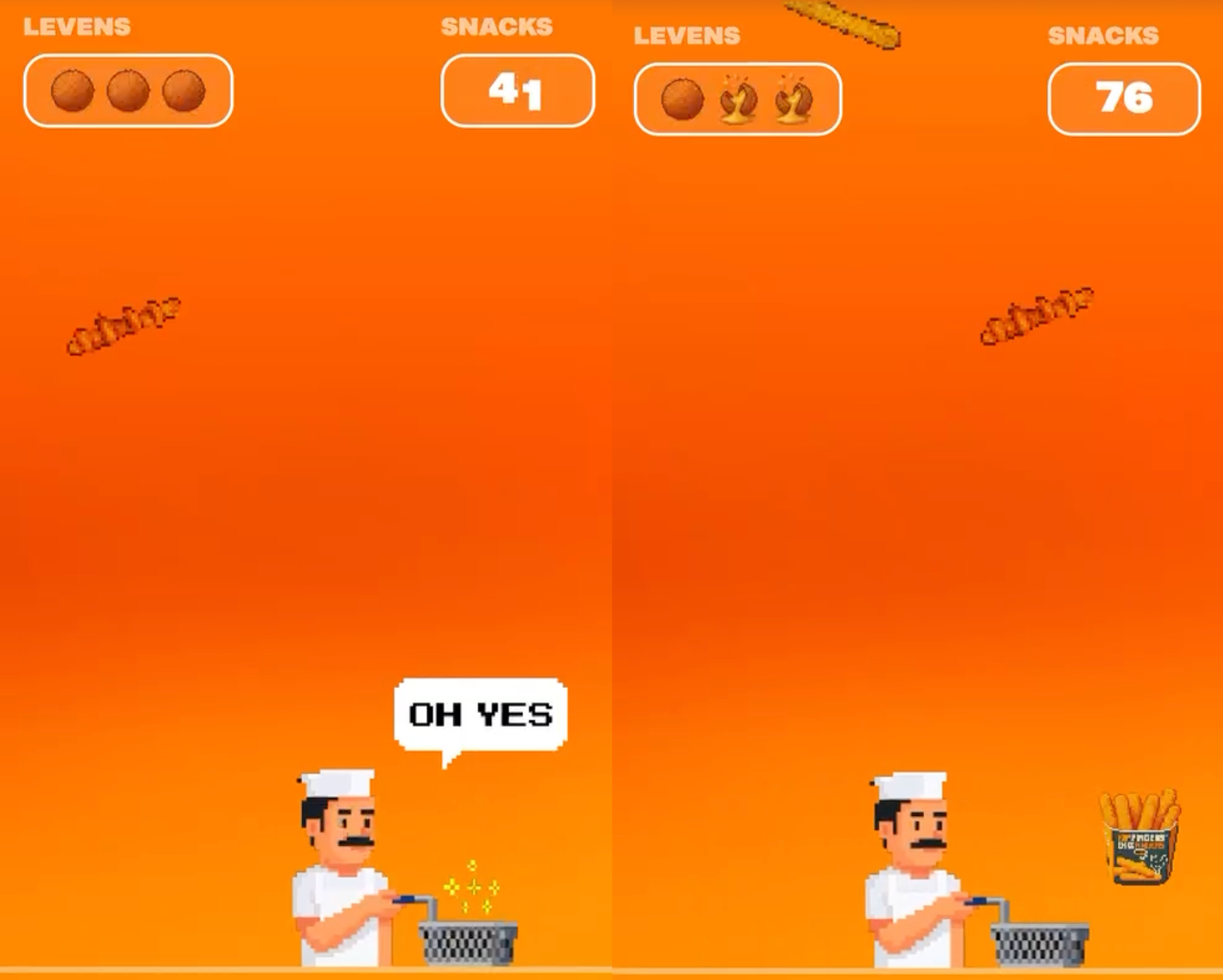
The game itself is deliberately straightforward. We designed a lightweight arcade experience where you play as a friturist, catching as many falling snacks as possible with your fryer basket. Let three snacks slip through, and it’s game over. Perfectly bite-sized. Perfect to play while waiting for your order.
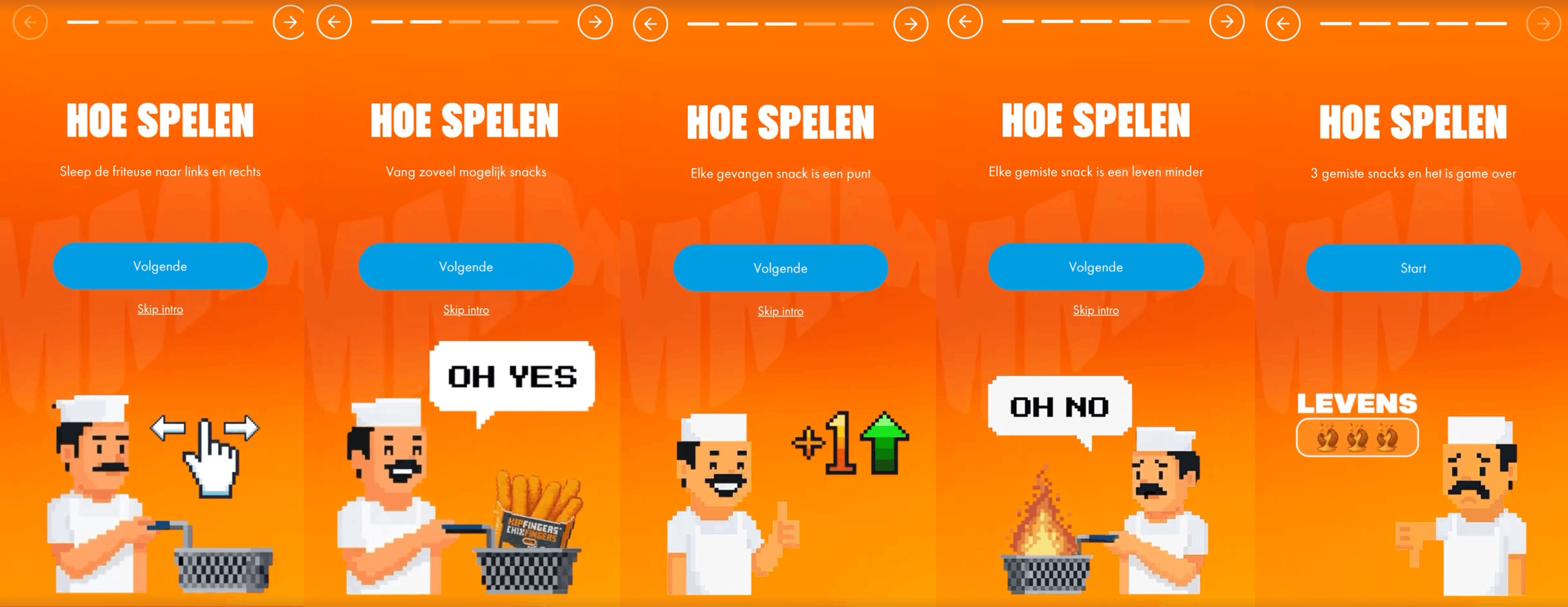
When designing the game, we made sure to capture that iconic, pixelated arcade look, blending it seamlessly with Mora’s color palette and a range of playful elements inspired by the world of the frituur.
Behind the scenes of this fun game, however, things are a little more sophisticated.
The game is built using Phaser, a JavaScript framework designed specifically for browser-based games. That means zero friction for players: scan a QR code, open the link, and start playing immediately. No downloads, no installs.
But browser games come with a well-known risk: if everything happens on the frontend, a slightly tech-savvy player could tweak a few values and magically end up with a flawless high score. Not exactly ideal when there’s a real prize on the line.
So instead, we flipped the logic: the entire game flow is modelled as a sequence of server-side events. Every falling snack, every catch, every miss: all validated on the backend. Did the player really catch 1,000 snacks? Did three snacks actually fall through? Was the sequence even physically possible?
If not, the score simply didn’t count.
The campaign runs in frituren across Belgium. Buy a Mora Viandel® or Mora Spicy Viandel®, receive a flyer, scan the QR code, and play. Each flyer contains a unique URL with a token. One token meant one legitimate attempt. No generic QR codes, no infinite retries.
Want another go? That means another Mora (Spicy) Viandel®. It’s a small detail, but it made all the difference: turning a fun little game into a genuinely fair competition.
The game featured a public leaderboard, complete with nicknames and scores. Which sounds harmless… until you remember just how creative the internet can be.
Instead of relying on static word filters, we added an LLM-based moderation step to evaluate nicknames in context. The result was surprisingly effective. Even the classic “but technically that’s not a bad word” tricks didn’t make it through.
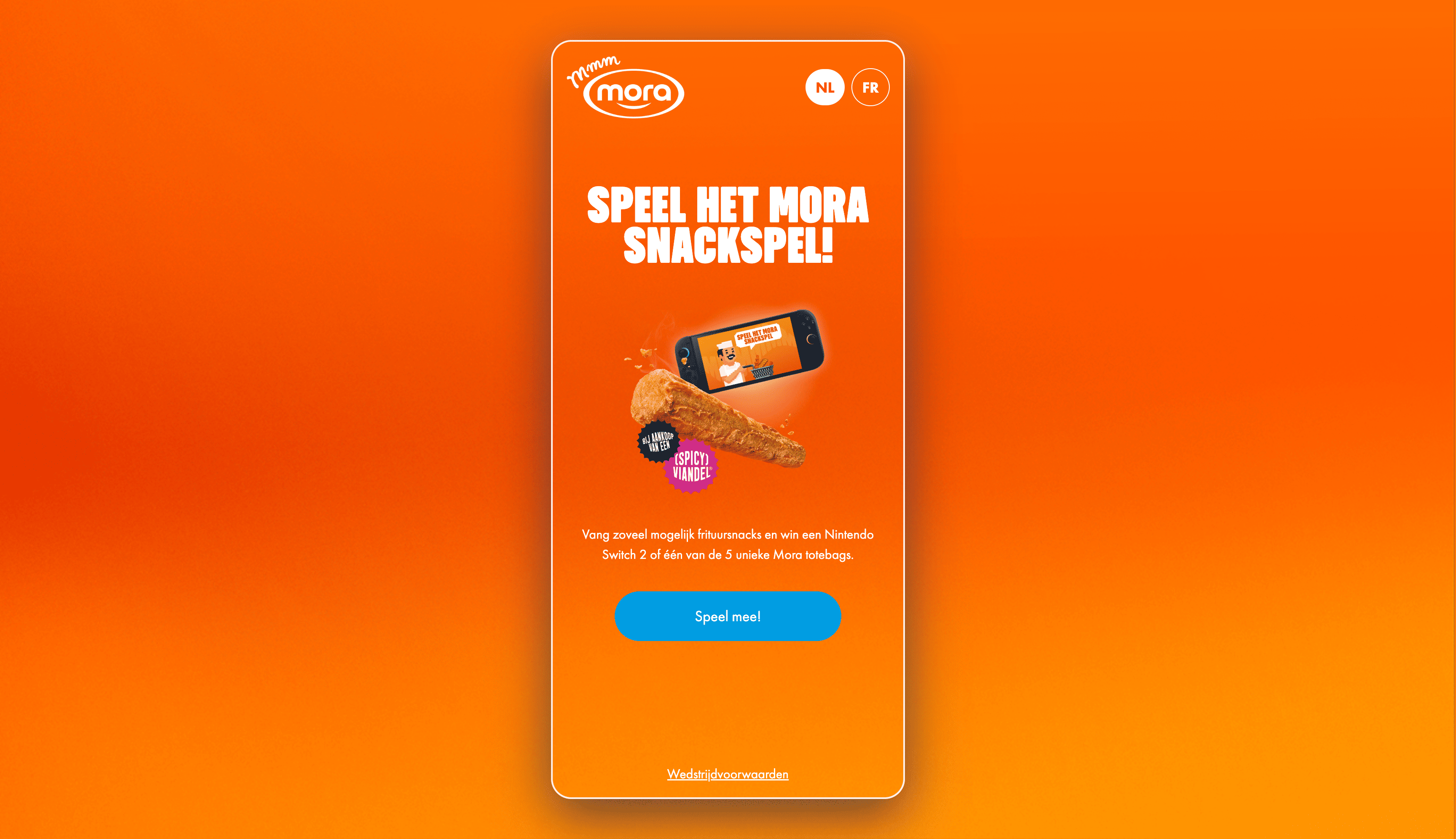
The campaign runs from December 1, 2025 to February 28, 2026. At the end of each month, the highest score wins a Nintendo Switch 2.
Three months, three winners. And after six weeks online:
For a one-shot, no-account-required browser game, those numbers felt very healthy.
What we loved most about this project was how seamlessly the physical and digital worlds came together: a paper flyer in a frituur leads directly to a browser-based game. The game is backed by serious server-side validation, all wrapped in a lighthearted, playful experience that fits the context perfectly.
So next time you pass by your local frituur, you know what to do: order a Mora (Spicy) Viandel®, scan the QR code, and see how sharp your snack-catching reflexes really are.
And who knows, you might soon be playing games on your brand-new Nintendo Switch 2…

Veldkant 33A
2550 Kontich
Gaston Geenslaan 11 B4
3001 Leuven


